Lake Minnewashta Preservation Association (LMPA) is pleased to announce the establishment of a Rainwater Runoff Management Grant Program for the Lake Minnewashta Watershed area.
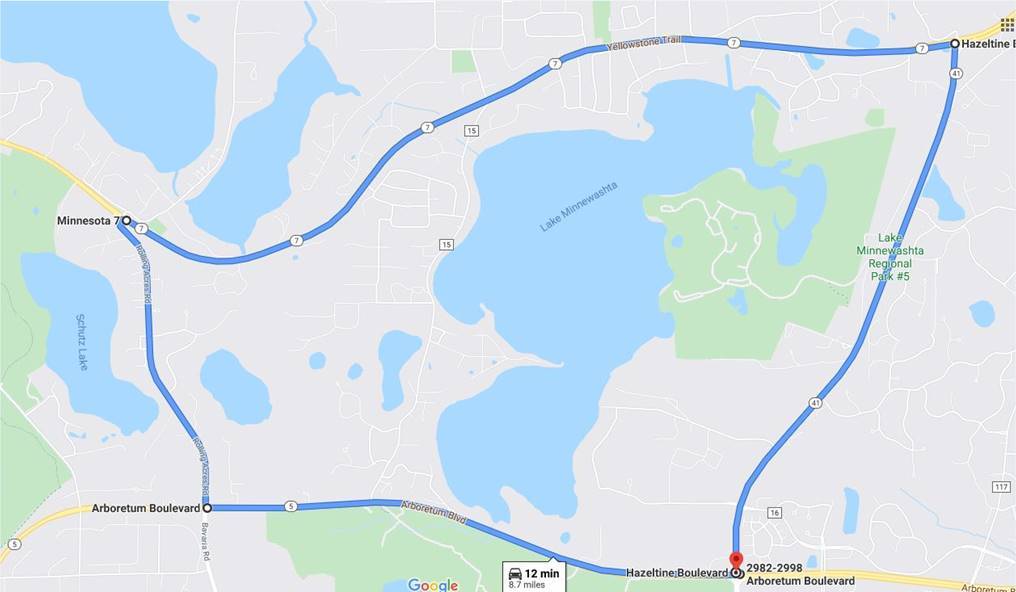
Lake Minnewashta Preservation Association (LMPA) in coordination with Carver County Soil & Water Conservation District (SWCD) will provide grants and technical assistance for residential rainwater runoff projects (for approved projects). Eligible area is the Lake Minnewashta Watershed area bounded by highway 7 on the north, highway 5 on the south, highway 41 on the east and Rolling Acres Road on the west, see attached map. The LMPA grant will provide funding up to 75% of project cost with a maximum of $500 per project and payment will be made upon completion. There could be additional funding available from SWCD for qualified projects. LMPA has a total of $5,000 set aside for this purpose. Runoff projects can consist of rain gardens and/or berms that restrain water from running into the Lake Minnewashta Watershed and neighborhood storm sewer systems, therefore draining through soil and native vegetation filtration.
Interested parties should contact either of the following individuals. These resources can also assist with design of your project;
Seth Ristow – sristow@co.carver.mn.us, Resource Conservation Technician, SWCD
Kevin Zahler – kjzahler@hotmail.com, Master Water Steward and board member, LMPA
With your application, please submit a plan, along with estimated cost of materials and installation cost. All applications must be approved by the SWCD prior to installation in order to receive cost-share funding. The cost-share payment will be paid upon completion, expected within 1 year of approval.
Eligible Application Area