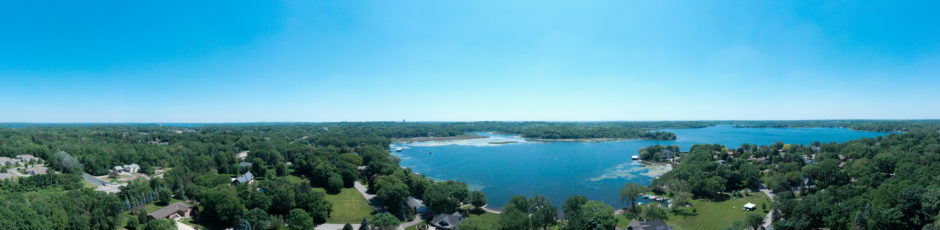
Shorelines are divided into four zones. Each has an important role in a healthy lakeecosystem and hosts specific plants based on their ideal growing conditions. The four areas are aquatic, emergent, transitional, and upland. Together, these zones make up the larger buffer zone that serve as a lake’s best support and defense line.
 Aquatic plant zone The aquatic zone starts in the water. This zone is always submerged in the water and is home to floating vegetation. Importance – Aquatic plants create habitats for fish, amphibians, and other wildlife that depend on plants for homes. – They provide oxygen required for all aquatic life. – They hold the lake bottom in place and absorb nutrients like phosphorus. If plants are removed, often algae is the next thing that uses that phosphorus. Keep it healthy To keep this zone healthy, leave as many aquatic plants as possible. Lakeshore owners may clear a path 15 feet wide for moving watercraft in and out. Anything wider requires a permit from the MN DNR. |
 Emergent plant zone Next is the emergent zone, where the water is shallow and plants start to emerge. The plants grow roots underwater but stems and leaves grow above. Importance – These plants stabilize the lake bottom. They keep the soil together and help protect the bank by breaking wave action. – This zone is fish spawning habitat for many fish species including native sunfish. Plants protect these nesting areas and ensure healthy fish populations. Keep it healthy It is crucial to limit the removal of emerging plants to keep your shoreline healthy. |
 Transitional plant zone Above the emergent zone is the transitional zone. The soil in this zone ranges from moist to saturated and is home to wildflowers, shrubs, grasses, and sedges. Importance – These plants prevent shoreline erosion and absorb excess nutrients such as phosphorus or nitrogen. Their deep roots hold the ground together to strengthen the soil, protect from erosion, and filter rain runoff removing pollutants before it reaches the lake. Keep it healthy Avoid mowing near the shoreline. Create a designated access path to your shore up to 12 feet wide to let native plants on either side flourish. |
 Upland plant zone Finally, the uppermost and driest zone is called the upland zone. This portion of the buffer zone ranges from moist to dry soil and grows plants that withstand drier conditions along with vegetation similar to the transitional zone. Importance – Upland plants capture and filter rainwater runoff and the pollutants it can carry. This is the lake’s first line of defense with runoff pollution. – This zone provides stability to the land and strengthens the soil beneath it with its deep roots. Keep it healthy Capture rainwater on site and allow it to soak into the ground. Do this by using more native plants in your landscaping, mowing the grass higher (at least 3”). Build a raingarden or rainwater reuse system to capture rain runoff and reduce nutrients washing into the lake. |
 Ordinary High Water Level Something to note on your shoreline is the ordinary high water level. This is the boundary of the water that determines the highest water level maintained to suggest where the vegetation changes from aquatic to terrestrial. It will vary depending on the shoreline. Any work done below this level may have additional permits or rules. Restore and maintain native plants in all zones to protect the lake A healthy shoreline is a healthy lake. Practicing sustainable shoreland management by restoring or maintaining native plant populations in each zone is key to having a healthy lake. |
Provided by the folks at the Carver County Water and Environmental departments
https://www.carvercountymn.gov

